An approved phrase should be useful more than once.
A reviewer has already made a useful decision. Translation memory gives the next person a way to find that decision, understand its origin and judge whether it applies.
Three teams translate the same product concept. One uses the wording from last quarter’s campaign. Another follows a term base. A third asks an assistant to produce something new.
The problem is not a shortage of possible translations. It is a lack of visible, reusable decisions.
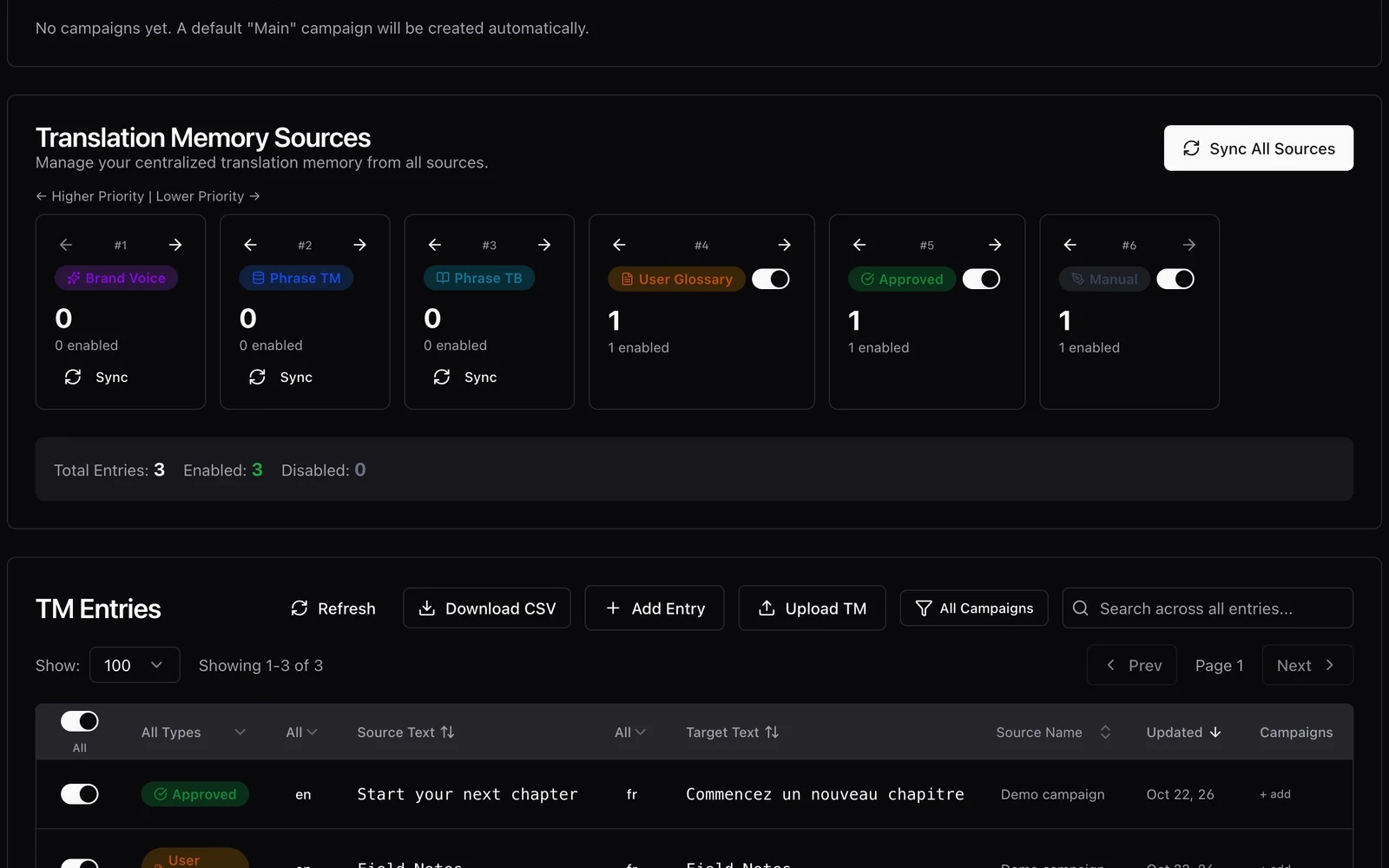
Translation memory gives a team a reference for source and target wording that has already been recorded. Nativ’s memory interface adds the ability to inspect entries, their origins, language pairs, enabled state and priority, so that reuse can be a maintained editorial practice.
A match needs an explanation
An exact string match can still need context. “Open” could be a command, a status or a description of a position. A fuzzy match can be helpful without being appropriate to copy unchanged.
When a workflow exposes translation-memory information, inspect the reference as well as the score. Ask whether the source phrase has the same purpose, whether the language pair is correct, and whether the terminology still belongs to the current product.
A match percentage describes a retrieval relationship. It is not a probability that a translation is correct, nor an editorial approval for every new placement.
Preserve where the wording came from
Nativ’s memory view distinguishes recorded sources such as manually entered material, approved translations, user glossaries and supported Phrase imports. Entries can carry a source name alongside language and text fields.
That provenance makes a review more useful. A reviewer can distinguish a term imported from a terminology resource from a phrase deliberately approved for a campaign. Both may be valuable; they represent different kinds of evidence.
Memory also needs maintenance. A disabled or outdated entry should not be treated as a timeless brand rule simply because it exists. Review the relevant enabled state and priority controls as part of a vocabulary change, and check the workflows that consume that memory afterwards.
Turn one review into a reusable reference
- Choose a phrase with a clear purpose. Start with wording that will recur, such as a product action or a short campaign message, rather than a sentence whose context is unique.
- Review the translation in its destination. Check both linguistic meaning and the design, product or editorial setting in which it will be used.
- Open Translation Memory in Nativ. Search for existing entries and inspect the language pair and origin before adding another version.
- Record the reviewed wording deliberately. Use the available entry or approval controls, identify the source where the interface allows it, and keep relevant campaign context attached.
- Test retrieval in a new request. Use a supported workflow that exposes memory information and inspect what was retrieved. Confirm that the reference is relevant to the new placement.
- Maintain the decision when the product changes. Update or disable superseded wording and check for conflicting entries instead of accumulating alternatives without explanation.
Make agent access useful without making it automatic approval
Nativ MCP includes tools to search, list, add, update and delete memory entries, together with statistics. This gives an assistant ways to inspect the reference material that surrounds a translation task.
A useful instruction can ask an agent to search first, show the relevant match and explain whether it fits the current message. A later instruction can record wording the person has reviewed. Those are separate editorial decisions even when they happen in the same conversation.
The same distinction applies to bulk work. Airtable’s review surface can expose memory information next to proposed translations; the reviewer still decides which value should be applied.
Keep the reference smaller than the uncertainty
Not every generated sentence deserves to become a permanent memory entry. Prefer material with a clear owner, language pair and reason for reuse. A small set of well-understood references can be more useful than a large collection of unexplained alternatives.
Combine that reference with brand voice and style guidance, then review the new output on its own merits. Memory preserves the team’s decisions; it becomes valuable when the next person can understand and reuse them.
Product references
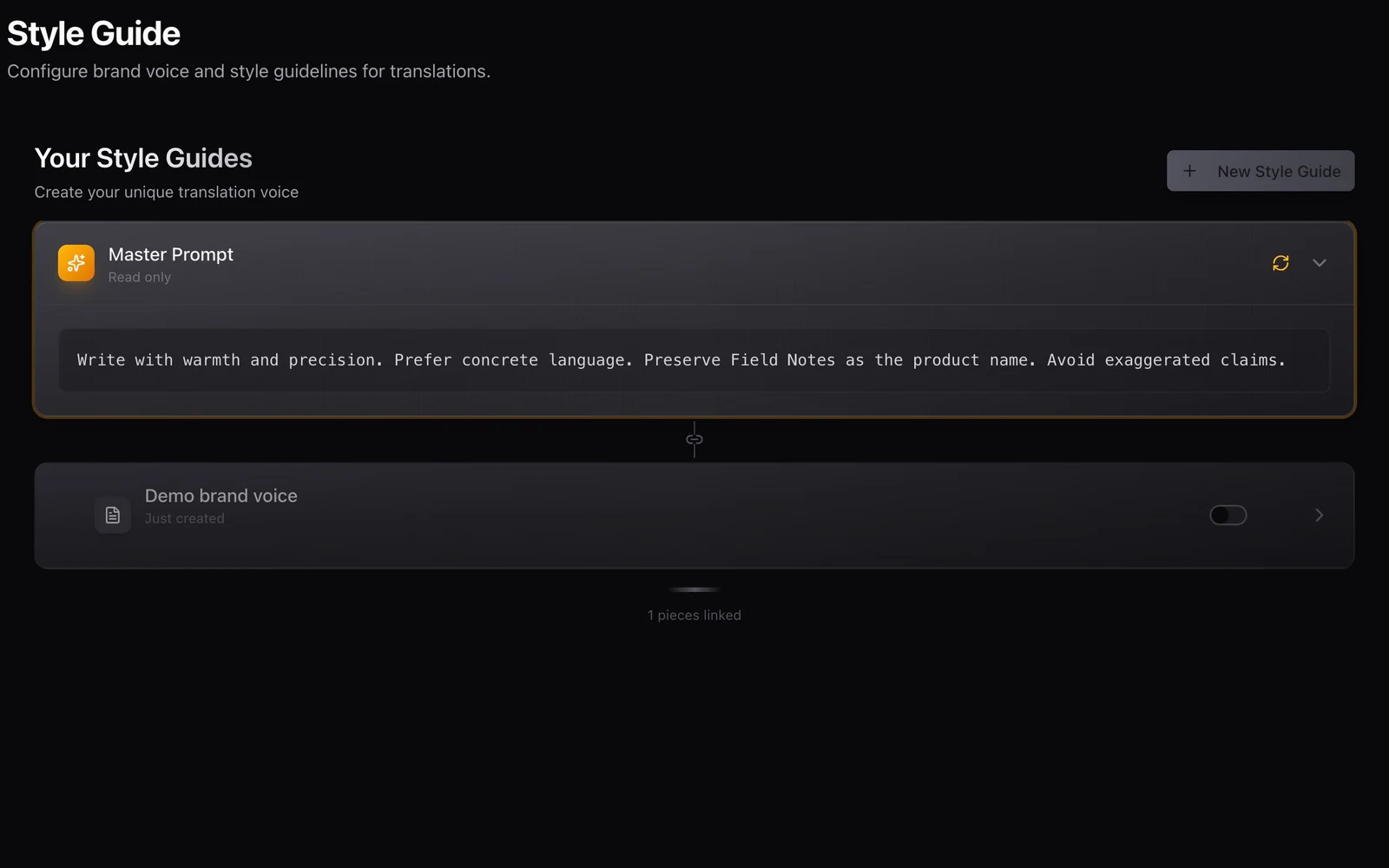
Your brand voice should travel with the work.
Use Nativ’s brand voice, style guides, terminology and language settings as a shared brief across creative tools, integrations and API workflows.
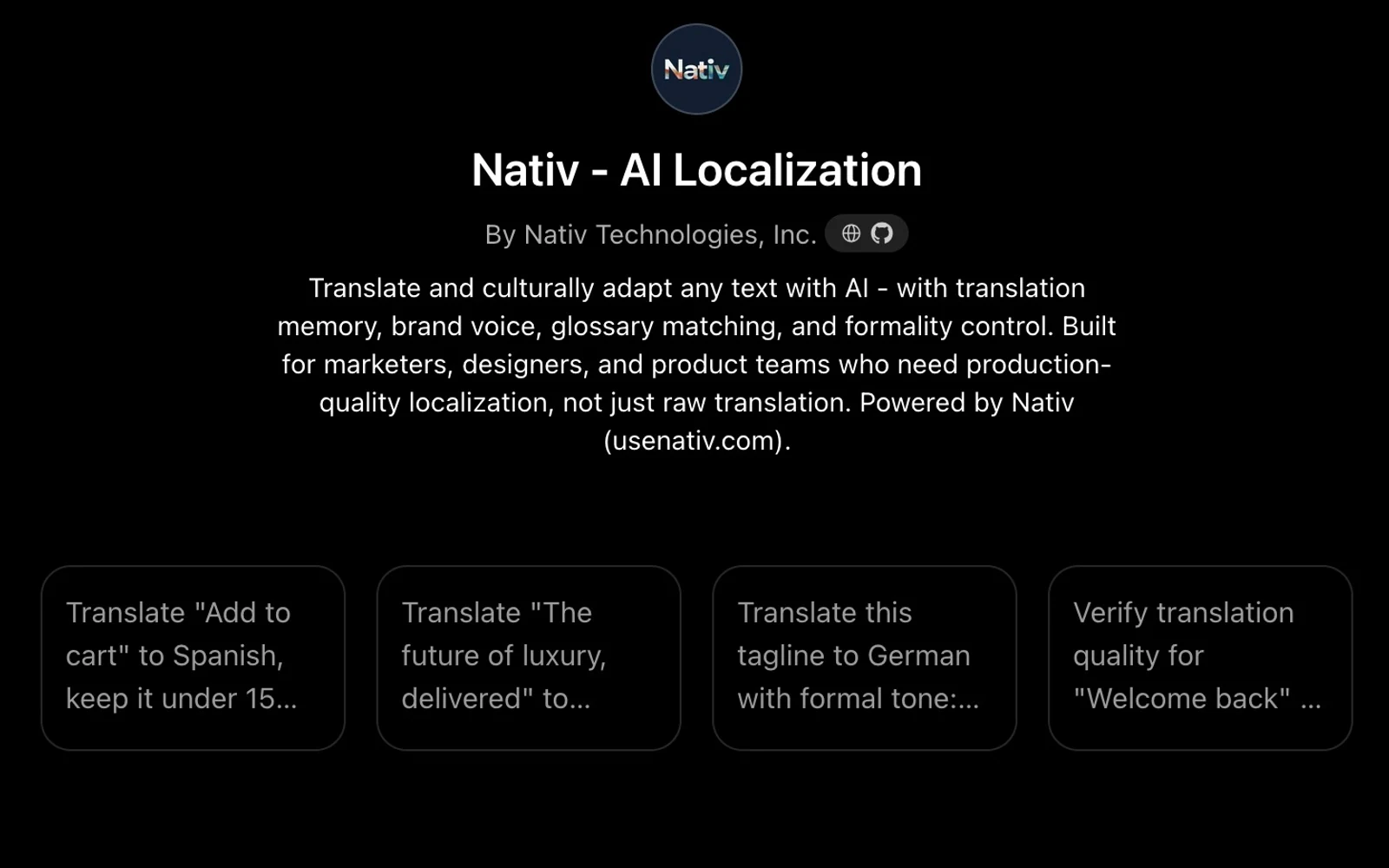
A conversation can start the work. Your brand context should follow.
Use the Nativ GPT for text localisation in ChatGPT, supply placement and terminology, and review translations with the context of your Nativ workspace.